CAFM (computer-aided facility management) runs the day-to-day of your buildings: the helpdesk, planned and reactive maintenance, contractors and compliance. An IWMS (integrated workplace management system) covers all of that and the wider estate: property and leases, space, capital projects and sustainability. Most UK estates start with CAFM, and add IWMS scope when leases, projects and the board's questions outgrow spreadsheets.
Many systems now sell both, so the choice is rarely all or nothing. The real questions are where to start, and whether the rest can be added later on the same data. This guide explains the difference, what changed for UK estates in 2026, and how to decide.
On this page
Key takeaways
- CAFM runs buildings day to day. An IWMS adds the property, leases, space and projects behind them.
- A CMMS is narrower than both. It focuses on equipment, work orders and maintenance schedules.
- Lease data is now a finance question. FRS 102 puts most leases on UK company balance sheets for periods starting on or after 1 January 2026, and IFRS 16 has applied in the UK public sector since April 2022.
- The government's property standard, GovS 004, says integrated workplace management systems should be used where possible.
- You don't have to choose once. A modular platform lets you start with CAFM, or with leases, and add the rest without moving data.
What is CAFM?
CAFM stands for computer-aided facility management. IWFM, the UK's professional body for workplace and facilities management, defines it as the support of facilities management by information technology. In practice, a CAFM system is where an estates or facilities team runs the buildings it is responsible for.
A CAFM system typically covers:
- Helpdesk and reactive maintenance. Requests logged, routed to the right engineer or contractor and tracked against an SLA.
- Planned maintenance. PPM schedules for every asset, often based on SFG20, with statutory tasks first.
- Assets. An asset register with condition, location and history.
- Contractors. Orders, quotes, approvals, accreditations and invoices.
- Compliance. Statutory checks, certificates and remedial actions, reported by site.
- Room booking and space. In many systems, basic space and booking tools.
Its users are estates and facilities managers, helpdesk staff, engineers and contractors. It answers one main question: is each building safe, compliant and working?
What is an IWMS?
IWMS stands for integrated workplace management system. IFMA, the international facility management association, describes it as an enterprise-level software platform that brings together data on projects, real estate, space, assets, maintenance and sustainability. In short, it is CAFM plus the business of the estate.
On top of CAFM, an IWMS typically adds:
- Property and leases. A register of land, buildings, leases and licences, with breaks, renewals and rent reviews.
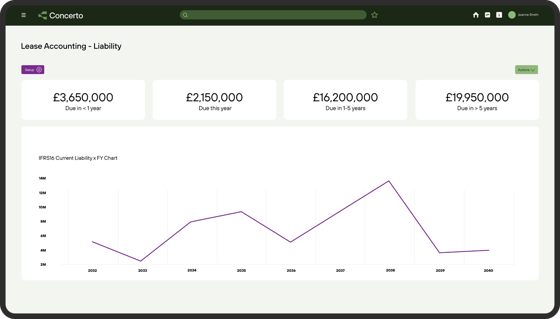
- Lease accounting. Lease liabilities under IFRS 16 or FRS 102, service charges and tenant invoicing.
- Capital projects. Budgets, milestones, risks and approvals, against the buildings they change.
- Space and workplace. Occupancy, space planning and desk booking.
- Sustainability. Energy and carbon data across the portfolio.
Its users go beyond facilities, to property, finance, workplace and sustainability teams and the board. It answers a wider question: what is the estate costing, and what should we do with it?
Verdantix, the analyst firm, now calls the newest IWMS platforms "connected portfolio intelligence platforms", because they join real estate, asset, energy and workplace data in one place.
CAFM vs IWMS at a glance
| Area | CAFM | IWMS |
|---|---|---|
| Helpdesk and reactive maintenance | Yes | Yes |
| Planned maintenance and statutory compliance | Yes | Yes |
| Assets and contractors | Yes | Yes |
| Room booking and basic space | Often | Yes |
| Property and lease register | Sometimes | Yes |
| Lease accounting (IFRS 16, FRS 102) | Rarely | Usually |
| Capital projects and programmes | Rarely | Yes |
| Sustainability and energy | Sometimes | Usually |
| Main users | Estates and facilities teams, engineers, contractors | Those teams plus property, finance, workplace and leadership |
| Main question it answers | Is each building safe, compliant and working? | What is the estate costing, and what should we do with it? |
Where CMMS and EAM fit
Two more acronyms come up in every software search.
- CMMS (computerised maintenance management system) focuses on maintenance: equipment, work orders, schedules and spare parts. It is common in manufacturing and plant. A CAFM system usually includes CMMS functions, and adds building-specific work such as compliance, contractors and room booking.
- EAM (enterprise asset management) manages physical assets through their whole lifecycle, from purchase to disposal. It is common for heavy infrastructure, utilities and industrial plant.
For most building estates the choice is between CAFM and IWMS. A CMMS suits a maintenance team with no wider estate to manage, and an EAM suits asset-heavy industry.
When CAFM is enough
CAFM is the right starting point when the pressure is on running the buildings. Signs that CAFM covers what you need today:
- Most of your questions are about jobs, maintenance and compliance.
- Leases are few, simple or handled well elsewhere.
- Capital projects are small, or run by another team in its own system.
- The board asks whether the estate is safe and compliant, and the cost question is answered by finance.
When you need IWMS scope
An estate usually needs IWMS scope when the property questions catch up with the maintenance ones. Common signs:
- Leases live in spreadsheets. Breaks, renewals and rent reviews are tracked by hand, and a missed date costs money.
- Finance needs lease figures. Lease liabilities have to be reported under FRS 102 or IFRS 16, and the data comes from estates.
- Projects sit apart from buildings. The capital programme is tracked separately from the buildings it changes, so nobody sees both.
- Space decisions lack data. You are deciding which buildings to keep without occupancy figures.
- Data is typed in twice. Maintenance, property and projects sit in separate systems, and someone re-keys between them.
- The board asks about the whole estate. Cost, risk and carbon, building by building, and the answer takes a fortnight.
What changed for UK estates in 2026
Four changes make the CAFM or IWMS question more pressing in 2027.
Leases moved onto UK company balance sheets
The FRC's amendments to FRS 102, the main UK accounting standard for companies outside IFRS, remove the operating lease distinction for lessees. They apply in most cases to accounting periods beginning on or after 1 January 2026, so 2027 is when many UK companies prepare their first accounts under them. IFRS 16 has applied in the UK public sector since April 2022.
Either way, finance needs accurate lease data, and estates usually holds it. That pulls the lease register, and often lease accounting, into the estates system.
Government guidance favours integrated systems
Version 2.2 of GovS 004, the government functional standard for property, says integrated workplace management systems should be used where possible, to improve agile working, space use and building performance. Functional standards apply across central government departments and their arm's length bodies, and other public bodies can use them as a guide.
NHS buying merged CAFM and IWMS
NHS Shared Business Services' 2024 planning notice for its Hard FM 3 framework had separate lots for CAFM and IWMS. Its April 2025 tender notice merged them into one lot for CAFM and IWMS together. For NHS buyers, the two are now bought through the same route.
Housing compliance widened
Awaab's Law, which came into force for social rented homes in October 2025, extends to more hazards from 30 November 2026, including excess cold and heat, falls, fire and electrical hazards. For councils and other bodies with housing stock, that means more inspections, deadlines and evidence for the CAFM side to manage.
Start with CAFM and grow, without moving data
The biggest risk in an IWMS project is trying to do everything at once. Data migration, training and change all land together, and the estate runs on the old system for longer than planned.
A modular platform avoids that. You start where the pressure is highest, such as maintenance and compliance, or property and leases. You add modules when you're ready, on the same data, with no second migration. Concerto is built this way: CAFM is one module of its IWMS, and every module runs on the same platform.
Starting from maintenance. Cumbria County Council moved to Concerto from its previous system in 12 weeks. The University of Manchester runs 300+ buildings and 10,000+ assets in Concerto. Jon Ashley, its Director of Estates Support, said going live with Concerto IWMS "has given us real-time assurance on compliance while laying the groundwork for fully joined-up project and programme management."
Starting from leases. Wagamama keeps the leases, landlord responsibilities and key dates for its 130+ UK restaurants in Concerto. Its maintenance had already been handled with Bellrock before it took Concerto for its lease data.
Starting from projects. Perth & Kinross Council runs a £600m capital programme of 180+ projects in Concerto, in the same system as the buildings those projects change.
Questions to ask before you decide
- What do you need to answer in the next 12 months? List the questions your board, finance and regulators will ask. Mark which are about running buildings and which are about the estate as a whole.
- Where does the data live today? List every system and spreadsheet that holds assets, jobs, certificates, leases and projects.
- Who reports lease liabilities? Ask finance whether lease data for FRS 102 or IFRS 16 comes from estates, and how reliable it is.
- Can you start small? Ask each vendor whether you can start with one module and add the rest later on the same data, and ask to see a customer who did.
- Is CAFM a module or a separate product? Ask whether the CAFM and the IWMS modules share one database, or are joined by integration.
- How will it connect? Ask which finance, HR and building systems it connects to, and how integrations are priced.
- What does it cost, module by module? Ask for prices by module, number of users and size of estate, including migration and integrations.
- Who owns the data? Check that the estate data stays yours if you change software or FM provider.
What it costs
The cost of CAFM or an IWMS depends on the modules, the number of users and sites, the state of your data and the integrations you need. An IWMS usually costs more because it covers more. Starting with the modules you need and adding others later spreads the cost and the change.
Ask vendors for prices by module, so you can compare the CAFM starting point with the full estate. Concerto prices by module, tiered by estate size and number of users, and confirms the full cost after scoping.
Final thoughts
CAFM keeps the buildings safe and working, and an IWMS adds the property, leases, projects and data that show what the estate costs and what to do with it. For most UK estates the question is where to start, and whether the rest can follow without moving data.
If you are comparing systems, our guides to the best CAFM software in the UK and the best IWMS software for UK organisations set out the options side by side.
Frequently asked questions
Is IWMS the same as CAFM?
No. An IWMS includes what CAFM does, such as helpdesk, maintenance and compliance, and adds property and leases, lease accounting, space, capital projects and sustainability. In many systems, CAFM is one module of the IWMS.
What does CAFM stand for?
Computer-aided facility management. It is software for running buildings day to day: the helpdesk, planned and reactive maintenance, assets, contractors and compliance.
What is the difference between CAFM and CMMS?
A CMMS focuses on maintenance of equipment: work orders, schedules and spare parts. A CAFM system usually includes those functions and adds building-specific work, such as statutory compliance, contractor management and room booking.
What are the key differences between an IWMS and a CMMS?
A CMMS manages maintenance work. An IWMS manages the whole estate: maintenance plus property, leases, space, capital projects and sustainability, for a wider set of users including property and finance teams.
Can CAFM handle multiple sites?
Yes. Most CAFM systems run estates of hundreds of sites, with compliance and jobs reported site by site. What they usually lack is the property side: leases, lease accounting and capital projects.
Does an IWMS replace finance or lease accounting software?
It doesn't replace your finance system. An IWMS with lease accounting calculates lease liabilities from the lease register and passes them to finance, usually through an integration with the finance system.
Can we start with CAFM and add IWMS modules later?
With a modular platform, yes. In Concerto, every module runs on the same data, so teams can start with CAFM, or with leases, and add the rest without re-entering data.
Is IWMS only for large organisations?
No. Estate size matters less than what you need to manage. A mid-sized estate with many leases or a capital programme can need IWMS scope, while a large estate focused on maintenance may only need CAFM to start.