Facility management (FM)
Facilities Management (FM) involves the day-to-day running and strategic oversight of buildings, assets and services. It helps ensure workplaces are safe, efficient and well maintained while supporting the wider goals of the organisation.
What does FM include?
FM is usually divided into two areas:
-
Hard FM – Covers physical systems like heating, lighting, lifts, building structure and fire safety.
-
Soft FM – Includes services such as cleaning, catering, landscaping, mail handling and security.
Together, they ensure that the built environment supports those who use it.
What skills does FM require?
Good FM blends technical know-how with strong communication and planning. The role often involves:
-
Maintenance and operations
-
Budget and cost control
-
Health and safety oversight
-
Project delivery
-
Sustainability planning
Facility managers need to understand buildings, but also people balancing practical needs with user experience.
Why FM matters
Facilities Management plays a vital role in:
-
Reducing downtime and reactive costs
-
Supporting employee wellbeing and safety
-
Meeting regulatory and environmental standards
-
Managing risks and improving resilience
-
Making better use of space and assets
It's not just about fixing things. It's about running smarter, safer buildings.
What is Concerto?
Concerto is a UK-based Integrated Workplace Management System designed to help organisations manage their property and facilities more effectively, all from a single, configurable platform.
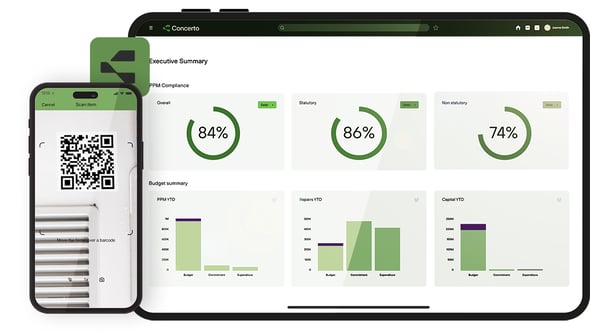
Built specifically for estates, facilities and workplace teams, Concerto brings together real estate, facilities management, maintenance, projects and sustainability data in one place. This allows organisations to move away from disconnected spreadsheets and legacy systems and instead make informed, evidence-based decisions about their estate.
Concerto is used across both public and private sector organisations to support operational efficiency, regulatory compliance and long-term estate strategy. Its modular design means teams can start with the functionality they need today and scale over time as requirements grow.